The maker · Houston, Texas
A nurse who stitches.
One pair of hands, one worktable, five years of appliqué — built alongside a career in nursing.
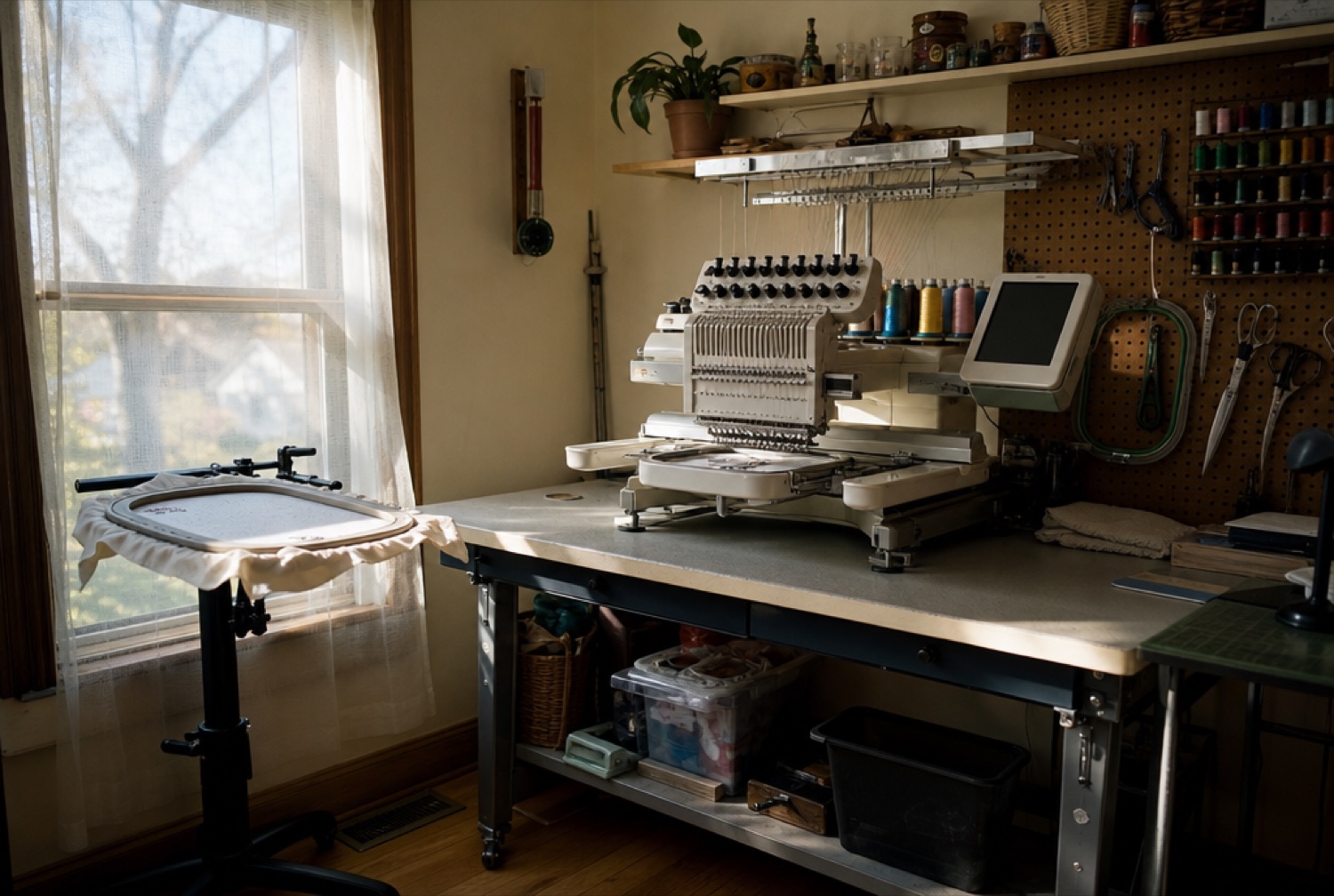
Fig. 01 — The workroom, by the window.
Houston · 2026
The five years
I started Edelweiss five years ago, in Houston, and built it slowly — alongside a nursing career, in the hours around shifts. It began as one machine and a stack of Cotton Couture cotton. It is still one pair of hands: I take the orders, digitize the letters, match the thread, stitch every piece, and pack it myself.
Appliqué is my signature, and to me the more refined form of embroidery. Instead of filling a letter with dense thread, the machine stitches a fabric shape down, I hand-cut it free, and the machine finishes the edge in a raised satin stitch. It has weight and dimension. It reads as something made, not printed.
I digitize many of my own letterforms in Embrilliance and StitchArtist, and work in PES and DST files. I match thread — Madeira, Isacord, Sulky, Exquisite — to fabric by eye rather than from a screen, across all 230 Cotton Couture solids. It is slower this way. That is the point.
How appliqué is made · in order
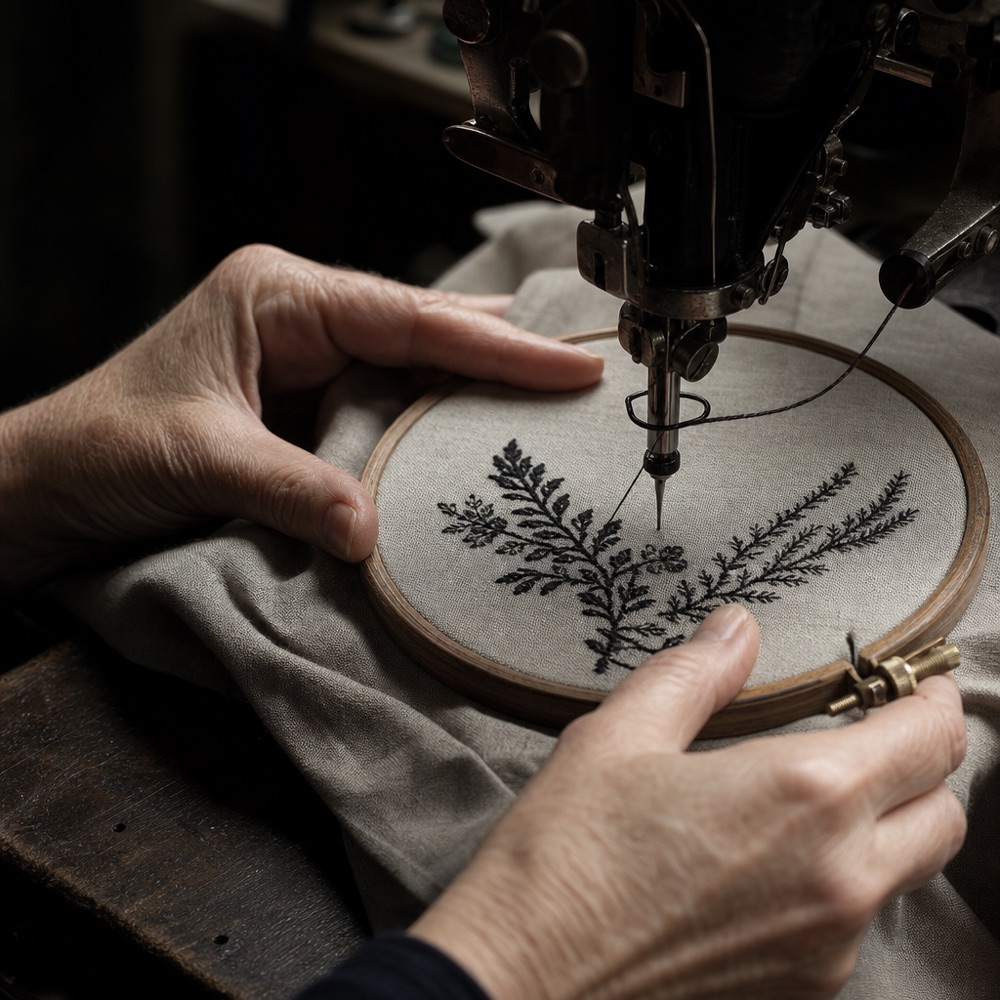
Step 01
The machine stitches the shape
The letter shape is stitched down onto the body fabric — the outline that becomes the appliqué.
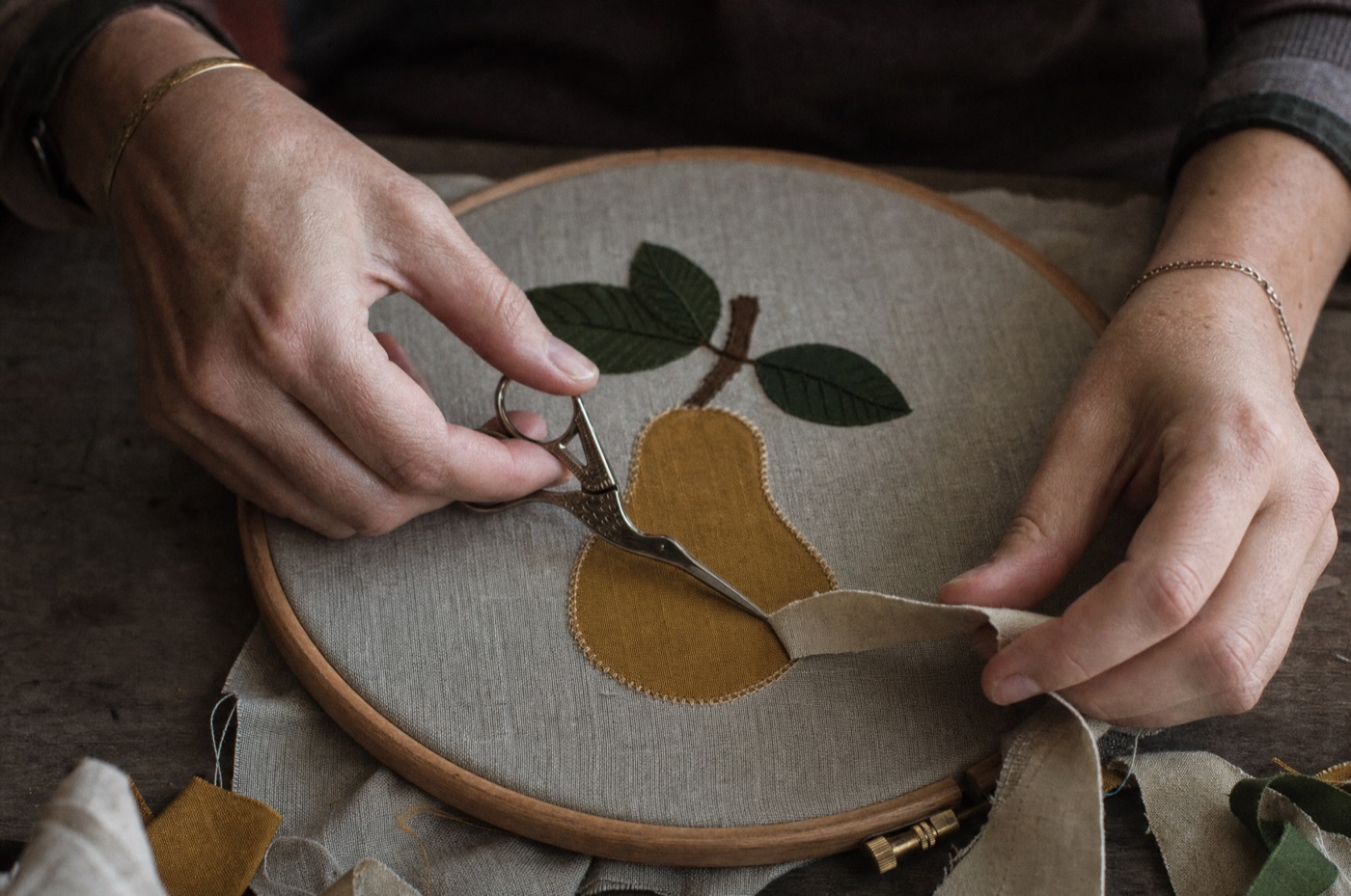
Step 02
I hand-cut it free
With small scissors, close to the stitch line, I trim the excess fabric away by hand. This is the slow part.
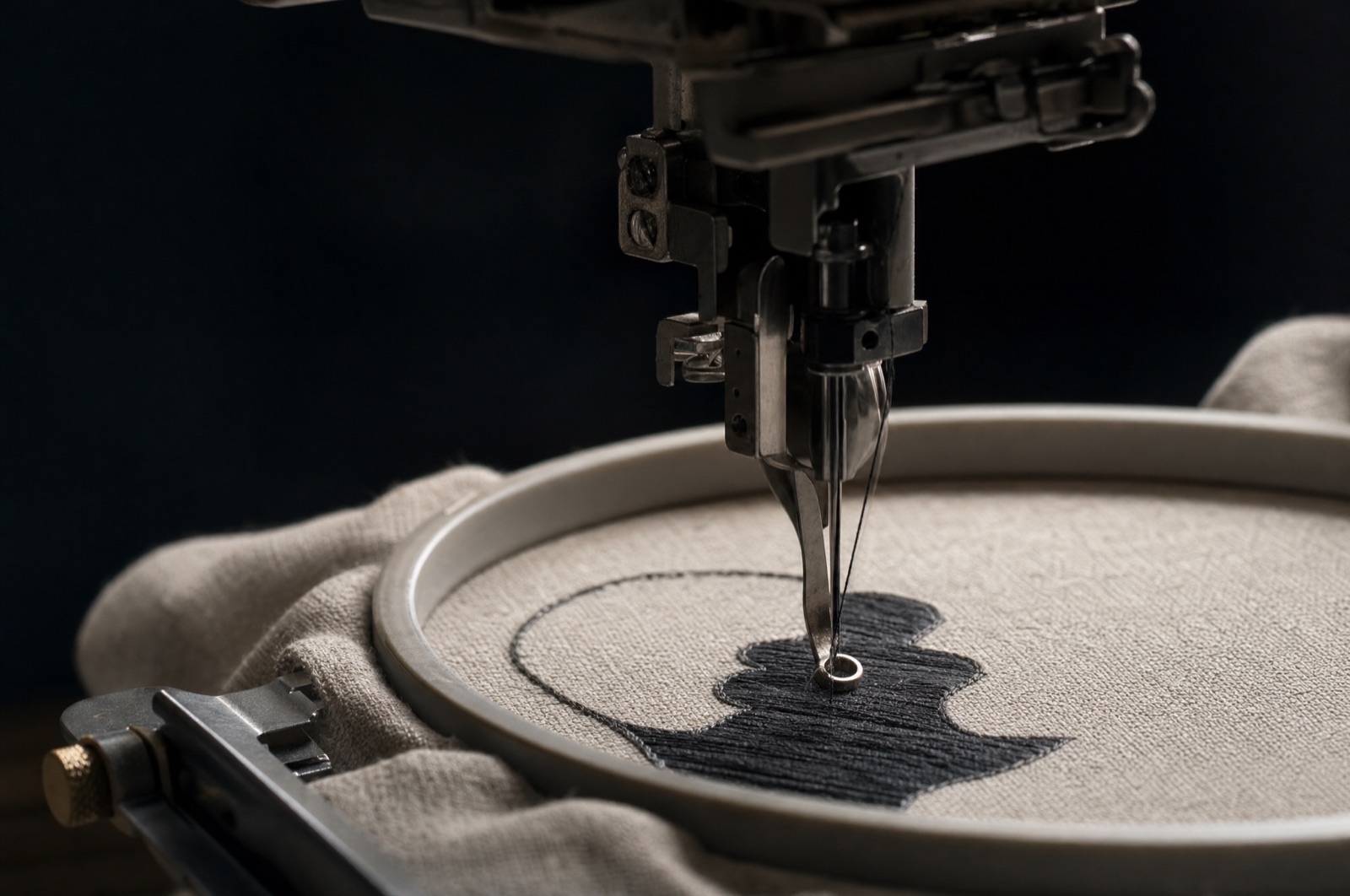
Step 03
The machine finishes the edge
A raised satin stitch seals every edge. That dimension is the difference you can feel.
The materials
Chosen by eye, not by screen.
The bodies are Michael Miller Cotton Couture — 230 solid colours I know by hand. Thread comes from Madeira, Isacord, Sulky, and Exquisite. I choose the pairing in the light on my table, because a colour on a screen is not the colour on the cotton.
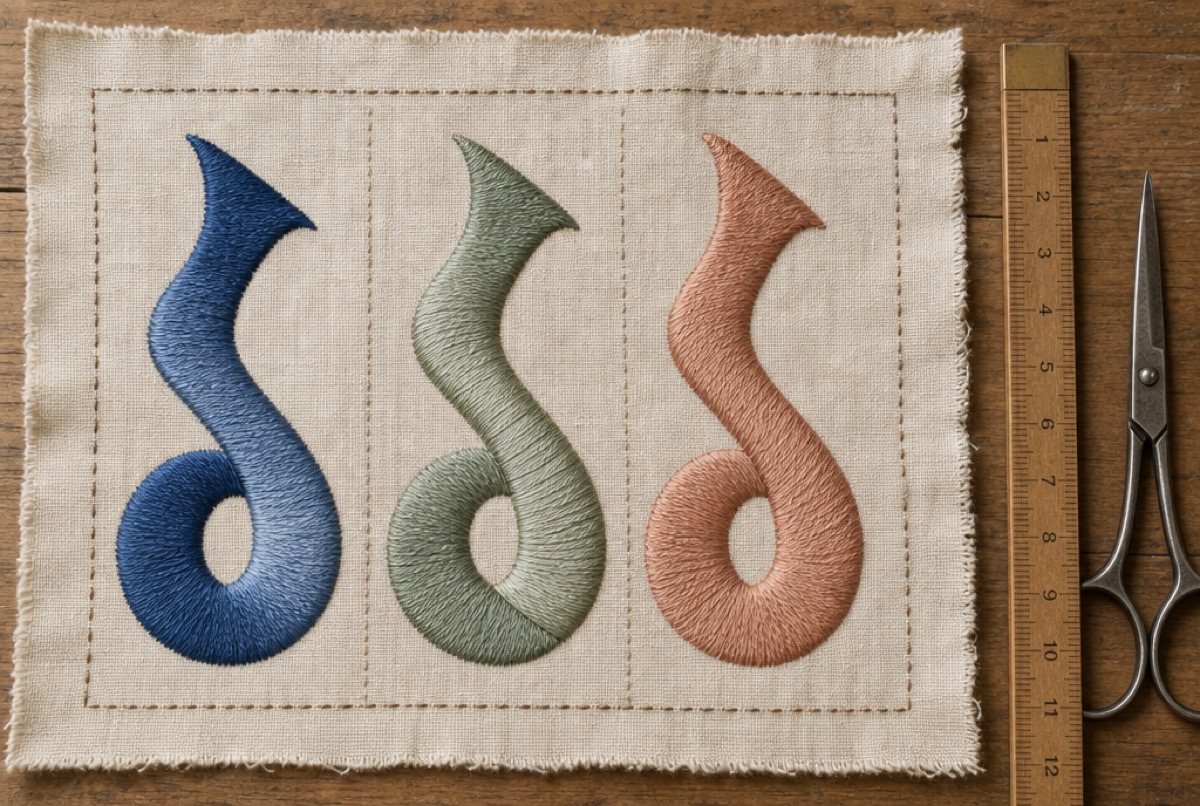
Fig. 02 — Letter sampler and tools.
“One pair of hands, and here is exactly how.”